



Clinical vs. Administrative Medical Assisting: Which Path Fits Your Goals Best?
Explore clinical vs. administrative medical assisting for students. Compare duties, skills, work settings, and career pathways, and learn how Edison State Community College helps students prepare for health care careers through hands-on training and flexible learning options.
August 3, 2026
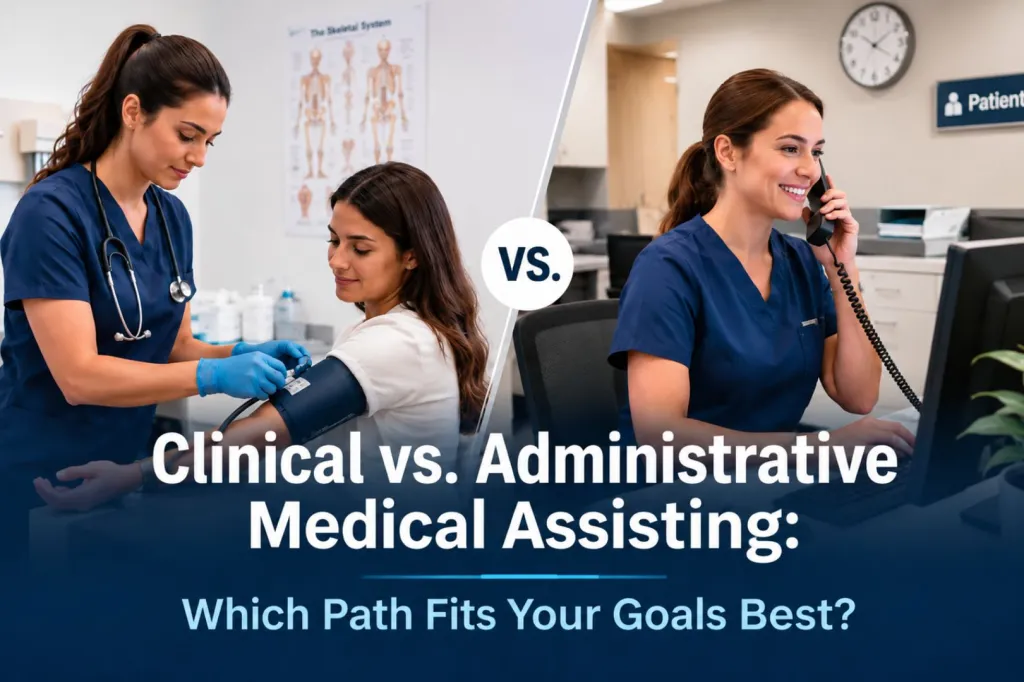
Choosing a health care career often starts with one important question: which role fits your interests and strengths best? For students exploring clinical vs. administrative medical assisting, understanding the difference between these two paths can make the decision clearer. Medical assistants play an essential role in keeping physician offices, clinics, and health care facilities running smoothly, yet the day-to-day work can look very different depending on the path a student chooses.
This blog breaks down what clinical and administrative medical assisting involve, the skills each path calls for, the work settings students may enter, and how the two roles connect within the broader health sciences field. It also explains how Edison State Community College helps students in Piqua and the surrounding communities prepare for entry-level medical assisting roles through hands-on training, career-focused coursework, and flexible learning options.
Edison State's Medical Assistant Pathway
Edison State's Medical Assistant program prepares students for both clinical and administrative responsibilities commonly performed in physician offices, clinics, and other ambulatory health care settings. Through classroom instruction, laboratory experiences, and internships, students develop the technical, professional, and communication skills needed to support patients and health care teams.
Because many employers seek medical assistants who can perform both clinical and administrative tasks, the program provides comprehensive preparation that helps students remain flexible and competitive in today's health care workforce.
Key Takeaways
- Clinical medical assisting focuses on hands-on patient care tasks, while administrative medical assisting focuses on the office and operational side of a health care practice.
- Many medical assistants perform a blend of both clinical and administrative duties, especially in smaller offices and urgent care settings.
- Both paths can lead to employment in physician offices, clinics, urgent care centers, and other ambulatory health care settings.
- Strong communication, organization, attention to detail, and professionalism support success in either role.
- Edison State's Medical Assistant program helps students in Piqua prepare for entry-level clinical and administrative roles and to take the Certified Medical Assistant (CMA) exam.
- Flexible scheduling, internships, and hands-on lab experience help students gain real-world skills before entering the workforce.
Understanding the Medical Assistant Role
A medical assistant is a versatile health care professional who supports both patients and providers. In many practices, medical assistants are the connection between the front office and the exam room, helping patients feel welcome while making sure providers have what they need to deliver quality care. Because the role touches so many parts of a practice, medical assisting is a flexible starting point for students who want to enter the health care field and build experience across different settings.
For Piqua students weighing clinical vs. administrative medical assisting, it helps to know that the two paths share a common foundation. Both require an understanding of medical terminology, patient privacy, professionalism, and how a health care office operates. From there, the paths branch into different focus areas—one centered on direct patient care and the other on the systems and communication that keep a practice organized.
What Clinical Medical Assistants Do
Clinical medical assistants focus on the hands-on, patient-facing side of care. They often work directly alongside physicians, nurses, and other providers to prepare patients for exams and support clinical procedures. Their work helps ensure that each patient visit runs smoothly and that providers have accurate, up-to-date information.
Common clinical responsibilities may include:
- Performing initial patient screenings and recording vital signs
- Gathering and documenting health history and patient information
- Preparing patients and exam rooms for provider visits
- Assisting providers during examinations and clinical procedures
- Collecting specimens and supporting basic laboratory tasks
- Explaining follow-up instructions and answering patient questions
Clinical work tends to appeal to students who enjoy direct patient interaction and want to be closely involved in the care experience. It calls for comfort with hands-on tasks, careful attention to detail, and the ability to put patients at ease during their visit.
What Administrative Medical Assistants Do

Administrative medical assistants focus on the organizational and operational side of a health care practice. They help keep the office running efficiently so providers can focus on patient care. This path is often a strong fit for students who enjoy communication, coordination, and problem-solving within a busy office environment.
Common administrative responsibilities may include:
- Greeting patients and managing check-in and checkout
- Scheduling appointments and coordinating provider calendars
- Managing medical records and updating patient information
- Handling phone calls, messages, and patient communication
- Supporting billing, coding, and insurance-related tasks
- Maintaining a welcoming and organized front-office environment
Administrative roles reward strong organization, clear communication, and the ability to stay calm while juggling multiple responsibilities. Students who like structure, technology, and helping practices operate smoothly may find this path especially rewarding.
Comparing the Two Paths for Students
When comparing clinical vs. administrative medical assisting, it can help to think about where you want to spend most of your day and what kind of work energizes you. Clinical assistants spend much of their time in exam rooms supporting direct patient care, while administrative assistants spend more time at the front desk and in the office managing the flow of information. Neither path is more important than the other—both are essential to a well-run practice.
It is also worth knowing that these roles often overlap. In many physician offices and urgent care settings, especially smaller practices, medical assistants perform a mix of clinical and administrative duties throughout the day. Because of this, training that covers both areas can give students added flexibility and make them valuable, well-rounded members of a health care team.
Skills That Support Both Paths
Whether students choose a clinical or administrative focus, many of the same professional skills contribute to success in medical assisting.
- Communication: interacting professionally with patients, providers, and coworkers
- Organization: managing schedules, records, and daily responsibilities accurately
- Attention to Detail: maintaining accurate information and following procedures carefully
- Professionalism: supporting positive patient experiences while protecting privacy and confidentiality
- Adaptability: responding effectively to changing priorities in fast-paced health care environments
- Teamwork: collaborating with physicians, nurses, administrative staff, and other members of the health care team
Developing these skills can help students remain flexible as they move between clinical and administrative responsibilities.
Where Medical Assistants Work
Both clinical and administrative medical assistants can find opportunities in a variety of ambulatory health care settings. For students from Piqua and nearby communities, such as Greenville and Eaton, these settings may include physician offices, health care clinics, urgent care centers, and specialty practices. Because health care organizations across west-central Ohio rely on skilled support staff, medical assisting can offer a practical entry point into the field with room for long-term growth.
Clinical vs. Administrative Medical Assisting at a Glance
|
Clinical Medical Assisting |
Administrative Medical Assisting |
|
Works directly with patients |
Focuses on office operations |
|
Records vital signs and health information |
Schedules appointments |
|
Assists during examinations |
Manages patient records |
|
Supports laboratory procedures |
Handles insurance and billing support |
|
Works primarily in exam rooms |
Works primarily at the front desk and office areas |
Edison State's Medical Assistant Pathway

Edison State helps students explore clinical vs. administrative medical assisting through a career-focused Medical Assistant program within its Health Sciences pathway. The program is designed to prepare students for entry-level clinical and administrative roles in settings such as physician offices, clinics, and urgent care offices, giving students in Piqua a strong foundation for a health care career close to home. Reviewing a step-by-step guide to becoming a medical assistant can also help students understand the general path into this career.
Students in the program learn to perform initial patient screenings, gather health information, and record vital signs, while also building the professional and organizational skills needed on the administrative side of a practice. This combined preparation reflects the reality of the workplace, where many medical assistants handle both patient care and office responsibilities. Graduates are also prepared to take the Certified Medical Assistant (CMA) exam, an important step toward employment in the field.
Hands-On Learning and Real-World Experience
Preparing for a medical assisting career takes more than classroom study. Edison State emphasizes hands-on learning that connects instruction with real health care environments. Internships give students the opportunity to work in actual health care settings, apply what they have learned, and build connections with professionals in the field. These experiences help students gain confidence with both clinical and administrative tasks before they begin their careers. Students can learn more about the program on the Edison State Medical Assistant program page.
Practical experience is one of the most valuable parts of medical assistant training. By working directly in physician offices and clinics, students strengthen their skills, improve their employability, and become more competitive as they enter the job market. This blend of academic coursework and applied experience helps students graduate ready to contribute from day one.
Through internships, laboratory activities, and supervised learning experiences, students apply classroom concepts in professional health care environments while building confidence in both clinical and administrative responsibilities.
Flexible Learning and Student Support
Edison State recognizes that many students balance education with work, family responsibilities, and other commitments. Flexible scheduling options and student support services help learners continue making progress toward their goals while managing busy schedules.
Students who have previous qualifying experience may also benefit from Prior Learning Assessment (PLA) opportunities that recognize existing knowledge and skills where appropriate. Advisors work closely with students to help identify academic pathways that support their educational and career objectives.
Continuing Along the Health Sciences Pathway
Medical assisting can be an excellent starting point for students interested in long-term health care careers. Through classroom instruction, direct patient interaction, and workplace experience, students often gain exposure to different areas of health care that may influence future educational and career goals. For students getting started, knowing what to expect during their first year at a community college can make the experience feel more manageable.
Edison State's broader Health Sciences pathway provides opportunities for students to continue exploring health care careers while building on the skills and experience developed through medical assisting.
Choosing the Right Medical Assisting Path

Both clinical and administrative medical assisting offer rewarding opportunities to support patients and health care providers. Students who enjoy direct patient interaction may be drawn to clinical responsibilities, while those interested in organization, communication, and office operations may prefer administrative tasks. Because many employers value professionals who can perform both functions, comprehensive training can provide career flexibility.
Edison State's Medical Assistant program helps students build the knowledge, hands-on experience, and professional skills needed for success in today's health care environments. Through internships, laboratory experiences, flexible learning options, and career-focused instruction, students can prepare for entry-level opportunities while building a foundation for future growth in the health care field.
The College also offers associate of science, business management, and medical coder options. Take the next step with us and explore programs, resources, and enrollment opportunities to support your career plans.
Frequently Asked Questions
What is the difference between clinical and administrative medical assistants?
Clinical medical assistants focus on hands-on patient care tasks, such as recording vital signs, preparing patients for exams, and assisting providers during procedures. Administrative medical assistants focus on the office side of a practice, including scheduling, managing records, and handling patient communication. Many medical assistants in Piqua and the surrounding areas perform a mix of both, especially in smaller offices and urgent care settings.
Which medical assisting path is right for students?
The best path depends on your interests and strengths. Students who enjoy direct patient interaction and hands-on tasks may prefer clinical work, while those who like organization, communication, and coordination may prefer administrative roles. Because the two paths overlap in many practices, training that covers both can give students added flexibility when entering the workforce.
Does Edison State offer internships or hands-on experience for medical assistant students?
Yes. Edison State's Medical Assistant program emphasizes hands-on learning through internships in real health care settings. These experiences help students apply their skills, build professional connections, and gain confidence with both clinical and administrative responsibilities before starting their careers.
Can I earn credit for prior experience through Prior Learning Assessment?
Students who have relevant knowledge or experience may be able to apply Prior Learning Assessment (PLA) toward eligible course requirements. Speaking with an Edison State advisor can help determine which options may apply to your academic plan and whether existing credit may help you move through the program more efficiently.
What kind of jobs can medical assistants find near Piqua?
Medical assistants can find opportunities in ambulatory health care settings such as physician offices, clinics, urgent care centers, and specialty practices throughout Piqua and surrounding communities like Greenville and Eaton. Both clinical and administrative training can help students prepare for entry-level roles with room for long-term growth in the health care field.
Does Edison State train students in both clinical and administrative medical assisting?
Yes. Edison State's Medical Assistant program prepares students for both clinical and administrative responsibilities commonly performed in physician offices, clinics, and ambulatory health care settings. This comprehensive approach helps graduates remain flexible and competitive in today's health care workforce.