


Skills You’ll Learn in Edison State’s Physical Therapist Assistant Program That Employers Want
Edison State Community College’s Physical Therapist Assistant program builds hands-on clinical skills, patient communication, and rehabilitation techniques employers value–preparing graduates in Ohio to help patients improve mobility, and succeed in fast-paced health care settings.
December 29, 2025
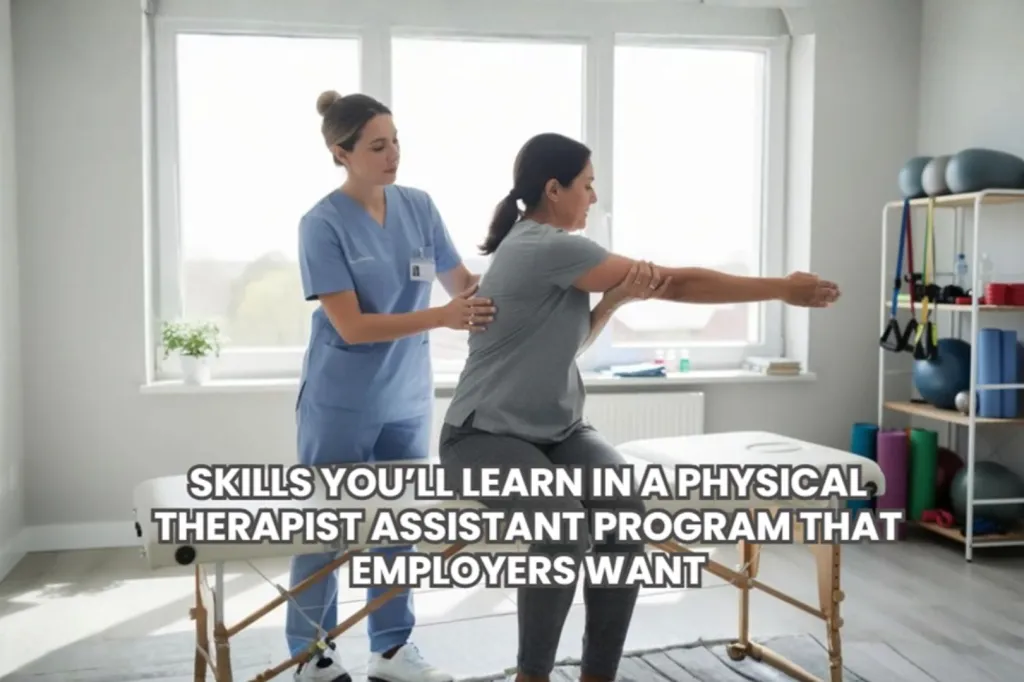
When you’re considering a career as a physical therapist assistant (PTA), the real question isn’t just what will I learn? – it’s will these skills actually get me hired?
At Edison State Community College, the answer is yes. Our Physical Therapist Assistant program is built around what employers in hospitals, outpatient clinics, and rehabilitation centers expect from new hires on day one. From therapeutic exercise and mobility training to patient education, documentation, and teamwork, every part of the curriculum connects directly to real clinical practice.
Whether you’re considering outpatient clinics, skilled nursing facilities, or hospital rehabilitation units, Edison State prepares you to guide patients toward better mobility, help them manage pain, and promote healing–all under the direction of a licensed physical therapist. Let’s break down the important PTA skills you’ll build and why they matter to your future career.
Key Takeaways
- Edison State’s PTA program develops clinical, communication, safety, and professionalism skills that align with employer expectations in today’s health care workforce..
- The program combines classroom instruction, hands-on lab training, and full-time clinical education experiences in a variety of health care settings.
- Commission on Accreditation in Physical Therapy Education (CAPTE)–accredited programs design coursework around hiring needs, including evidence-based practice, documentation, and teamwork in hospitals, outpatient clinics, and rehab centers.
- Soft skills like empathy, reliability, and adaptability matter just as much to hiring managers as hands-on treatment techniques.
Clinical Treatment Skills Employers Rely On
At Edison State, students build a strong foundation in anatomy, physiology, kinesiology, and pathophysiology courses, so they understand how injuries and medical conditions affect movement.
Students will develop hands-on skills in:
- Therapeutic exercise: Guiding patients through strength, flexibility, endurance, and balance training for common conditions like joint replacements, sports injuries, and chronic pain, and other conditions that cause weakness
- Manual therapy: Hands-on treatment techniques involving massage, movement of joints, and orthopedic techniques to improve tissue and joint mobility.
- Mobility and transfer training: Assisting patients with gait training and safe movement using walkers, canes, or wheelchairs.
- Lab-to-clinical progression: Skills are practiced in lab settings first, then applied under supervision during clinical rotations at clinical education sites. This progression ensures students are prepared to deliver quality care with confidence.
By graduation, students have practiced these skills repeatedly in structured labs and clinical patient care environments.
Therapeutic Modalities and Equipment Training
Edison State PTA students gain experience to be competent and safety-conscious with equipment used for treatments, like electrical stimulation and ultrasound. Therapeutic modalities are a core part of physical therapy services and knowing how to use them correctly is essential for injury prevention and helping patients recover.
Common modalities include:
|
Modality |
Purpose |
|
Electrical stimulation |
Pain management, muscle re-education |
|
Ultrasound |
Deep tissue heating promotes healing |
|
Heat and cold packs |
Reduce pain, manage swelling |
|
Traction |
Spinal decompression |
|
Compression devices |
Edema management |
|
Basic wound care adjuncts |
Support tissue healing |
Students learn indications, contraindications, skin inspection, and infection control practices – all critical expectations in modern clinics.
Labs often simulate outpatient and hospital environments aligned with current practice standards. Students become comfortable setting up, operating, and cleaning equipment according to infection control policies and Occupational Safety and Health Administration (OSHA) guidelines. This preparation translates directly to productivity and safety in real clinics.
Communication and Patient Education Skills Employers Value

Employers routinely cite communication as one of the top reasons they hire or promote physical therapy assistants. In busy rehabilitation settings, clear and compassionate communication keeps the health care team aligned and helps patients stay engaged in their recovery.
Edison State’s PTA program develops students' interpersonal skills:
- Plain-language instruction: Learning to explain treatment plans and exercise instructions in terms that patients of all ages, cultures, and health literacy levels can understand. Demonstrations and teach-back techniques ensure patients truly grasp what they need to do at home.
- Gathering and relaying information: Collecting subjective information, pain levels, functional changes, red flags, and communicating it clearly to supervising physical therapists, nurses, or physicians.
- Navigating difficult conversations: Practicing with motivating disengaged patients, responding to frustration or fear, and maintaining calm, professional behavior under stress.
- Interprofessional education: Graded role-plays, presentations, and simulations (sometimes with nursing students) help build these skills before students enter clinical internships.
Strong communication supports better patient care, smoother teamwork, and higher patient satisfaction, all outcomes employers care about deeply.
Documentation, Organization, and Professionalism
Today’s employers expect new PTAs to arrive with a working knowledge of electronic health records and payer-focused documentation standards. Good documentation isn’t just paperwork; it’s how you prove the value of your care and ensure accurate records for billing and continuity.
Students develop experience with:
- Writing treatment notes: You’ll practice daily treatment notes, progress summaries, and discharge input that reflect measurable goals, current procedural terminology (CPT) codes, and medical necessity in line with Medicare and major insurer guidelines.
- Time management and caseload organization: Lab and clinical rotations teach you to plan back-to-back treatments, prepare equipment in advance, and prioritize patients safely.
- Professionalism topics: The curriculum covers punctuality, dress code, social media conduct, confidentiality, and ethical decision-making according to the American Physical Therapy Association’s (APTA) Code of Ethics.
Solid documentation and professionalism directly affect hiring decisions, performance evaluations, and long-term career growth. Employers notice when new hires are organized, reliable, and ready to contribute from day one.
Teamwork, Ethics, and Safety in Real-World Practice
Hiring managers in hospitals, skilled nursing facilities, and outpatient clinics want physical therapy assistants who understand their role on the health care team and can be trusted with patient safety. Teamwork and ethics aren’t abstract concepts; they’re daily expectations.
PTAs are essential members of the health care team. At Edison State, students learn to:
- Working under supervision: Learn how to function under the direction and supervision of a licensed physical therapist, including what can and cannot be delegated to a PTA.
- Interprofessional collaboration: Communicating with nursing, occupational therapy, speech therapy, and case management is essential for coordinating care and discharge planning.
- Safety and risk management: Training covers fall prevention strategies, infection control procedures, checking equipment, and responding to emergencies like a sudden change in vital signs during therapy.
- Ethics modules: Real-world case studies address boundary issues, informed consent, and reporting concerns, mirroring scenarios students encounter in clinical placements.
Employers value PTAs who know their scope of practice, communicate proactively, and prioritize patient safety above all else.
From Classroom to Career

Edison State’s program structure helps students transition from theory to practice over about two years, ending with full-time clinical rotations that often lead directly to job offers. The goal is to make sure students are ready to work with patients in real health care settings.
Here’s what to expect:
|
Component |
Details |
|
Clinical education[SY1.1] |
Around 16 20 weeks of full-time placement, spread across two to three rotations in settings like outpatient ortho, inpatient rehab, and long-term care acute care, skilled nursing facilities, pediatrics, and other specialties as available |
|
Licensure preparation |
Review courses aligned with the National Physical Therapy Examination (NPTE) for PTAs, practice questions based on current test blueprints, and support for meeting state deadlines |
|
Career services |
Resume and cover letter workshops, mock interviews with experienced professionals, and networking through advisory boards, alumni, and local employers |
Job outlook data is reassuring: Physical therapy is a field in high demand due to an aging population and a growing need for rehabilitation services.National job growth for PTAs is projected at double-digit rates through 2034, with thousands of annual openings. The skills you build in a selective admissions program position you well for employment across multiple programs and practice settings.
Start Building In-Demand Skills at Edison State
Edison State Community College’s PTA program in Troy emphasizes building practical, employer-valued skills such as patient care techniques, therapeutic exercise, communication, and teamwork. These competencies help graduates transition smoothly into clinical settings. By mastering both technical and interpersonal skills, students position themselves as reliable, job-ready professionals in health care environments.
At Edison State Community College, we focus on hands-on learning and career preparation. Our faculty supports students pursuing careers in PTA in Piqua with practical training and real-world experience. Other career pathways in health sciences, such as medical laboratory technician, registered nursing, and respiratory care, allow students to explore diverse roles within the health care field. Connect with Edison State to learn how to begin your path toward becoming a physical therapist assistant.
Frequently Asked Questions
What is the difference between skills learned by a PTA and a physical therapist (PT)?
Physical therapists evaluate patients, diagnose movement disorders, and design plans of care. Physical therapy assistants implement delegated treatments, document patient responses, and communicate changes to the PT. PTA programs train students specifically for the assistant role, focusing on hands-on intervention, safety, and clear communication with supervising PTs.
Can I switch from being a PTA to a PT later, and will my PTA skills help?
Yes, some PTAs later complete a bachelor’s degree and apply to Doctor of Physical Therapy (DPT) programs. Your hands-on experience with patients, documentation, and teamwork can strengthen your PT school application and give you a head start in clinical reasoning.
How much direct patient contact will I get during a typical PTA program?
While exact hours vary, accredited programs usually provide multiple part-time lab simulations plus. At Edison State, students have the opportunity to experience 20 weeks of full-time clinical education in three different settings.
Do employers prefer graduates from CAPTE-accredited PTA programs?
Accreditation in physical therapy education from the Commission on Accreditation in Physical Therapy Education (CAPTE) is required for licensure in every U.S. state and territory. A PTA must graduate from an accredited program and pass the national licensure exam prior to being hired as a PTA, so graduating from a CAPTE-accredited program is essential.
Which soft skills should I start developing now if I plan to apply to a PTA program?
Focus on empathy, active listening, reliability, comfort with physical work, and willingness to learn. Volunteering or working in a health care setting, even in front desk or aide roles, helps you practice these traits and shows admissions committees your dedication. Basic life support and cardiopulmonary resuscitation (CPR) certifications are also often required courses, so getting certified early is a smart step.