


How Long Are Community College Programs?
Community college programs offer flexible learning, career-focused training, and affordable education options. Understanding how long completing a program at a community college takes helps students plan timelines, manage coursework, and choose the right path toward degrees, certificates, or transfer opportunities.
January 19, 2026
Attending a community college is a flexible option for students who want affordable education and career-focused training. The length of time you’ll spend at a community college varies depending on your schedule, program type, and personal responsibilities. Some students finish quickly, while others take a slower pace to balance work or family. Planning your course load wisely can make a big difference in your timeline. In this blog, we’ll break down how long community college programs usually take and what factors can shorten or extend them.
Key Takeaways
- Most associate degrees at U.S. community colleges are designed to be completed with two years (four semesters) of full-time study, requiring approximately 60–65 credits.
- Many community college students take three to four years to complete their programs because they attend part-time, work, or change majors along the way.
- Certificates and vocational programs can take anywhere from a few weeks to 12–18 months to complete, and some community colleges now also offer four-year bachelor’s degrees.
- Your course load (full-time vs. part-time), remediation needs, and transfer goals are the main factors that determine how long it will take to complete your program at a community college.
- Taking longer than two years is common, practical, and often the smartest choice for students balancing work, family, and other responsibilities.
How Long Will I Need to Attend a Community College?
Most community college programs are structured for two years of study, but many students take longer, and that’s perfectly okay. Understanding your best timeline helps you plan a path that fits your life.
A standard associate degree requires approximately 60–65 college credits, typically completed over four full-time semesters (about 24 months) when students take 15–16 credits per term. However, the numbers tell a different story about actual completion times. National data show that only about 13–15% of undergraduate students at community colleges finish their associate degree within that two-year window. The majority, roughly 62% enroll part-time, which extends their timeline to three, four, or even more years.
Your calendar may also look different depending on whether your local community college uses semesters or quarters. Most institutions run two 16-week semesters per academic year (fall and spring), while some operate on a quarter system with three 10–12 week terms.
The bottom line? Realistic time frames vary widely based on your individual situation, and that flexibility is one of the greatest strengths of the community college model.
Typical Community College Program Lengths
Community colleges offer multiple program types, each with different durations to meet various career paths and educational goals. Here’s what you can expect from the most common options.
Associate Degrees (AA, AS, AAS)
Associate degrees represent the flagship offering at most community colleges. These two-year degree programs typically require 60–70 credits and take full-time students about four to six semesters to complete. The three main types include:
|
Degree Type |
Focus |
Typical Use |
|
Associate of Arts (AA) |
Liberal arts, humanities |
Transfer to a 4-year university |
|
Associate of Science (AS) |
Science, math, technical fields |
Transfer to a 4-year university |
|
Associate of Applied Science (AAS) |
Career-focused training |
Direct workforce entry or transfer to a 4-year university |
Short-Term Certificates
Many community colleges offer career or technical certificates ranging from three to eighteen credits that students can complete in one semester or less than a year. These quick credentials prepare students for specific jobs in fields like medical scribing, CNC programming, or IT support.
Longer Certificates and Diplomas
Programs in areas like practical nursing, agribusiness, or HVAC often require one to two years, including prerequisites. These prepare students with the hands-on training and general education courses employers value.
Developmental Coursework
Students who need to build foundational skills in math or English may start with developmental or remedial courses. This coursework can add one to three extra semesters before students begin credit-bearing classes, but it’s an essential investment in long-term success.
Non-Credit and Workforce Programs
Community colleges generally provide non-credit workforce training, ESL classes, and continuing education that may last from a few weeks to a single semester. While these don’t lead to a degree, they offer valuable skills for career readiness and personal growth.
Factors That Change How Long a Community College Program Takes
The “two years” benchmark assumes an ideal full-time path with no detours. In reality, several factors can extend or shorten your timeline, and understanding them helps you plan realistically.
Enrollment Status
The difference between full-time and part-time enrollment dramatically affects your completion timeline:
|
Enrollment Type |
Credits Per Term |
Approximate Time to Degree |
|
Full-time |
12–18 credits |
2 years (4 semesters) |
|
Three-quarter time |
9–11 credits |
3 years (6 semesters) |
|
Part-time |
6–8 credits |
4–5 years (8–10 semesters) |
|
Light part-time |
3–5 credits |
6+ years |
Part-time students taking six to nine credits per semester will stretch a standard two-year program into roughly three to five years, but this pace may be what allows them to succeed.
Work and Family Responsibilities
Many community college students work 20–40 hours weekly or care for children and family members. Community colleges tend to serve students juggling multiple priorities. This reality influences course load decisions, and that’s by design.
Placement and Remedial Classes
Students who test into developmental courses may need extra terms to reach college-level math or English. While this adds time, completing these foundations properly sets you up for success in major-specific courses later.
Program Choice and Selective Admissions
Technical or health care programs like nursing, physical therapist assistant, or medical laboratory technician often have competitive, selective admissions processes. Waitlists and prerequisite requirements can add an extra year to your timeline, even for highly qualified prospective students.
Academic Performance
Withdrawing from or failing key courses can delay progress, especially if those classes are only offered once per year. Maintaining a strong grade point average keeps you on track and opens doors for transfer opportunities.
Transfer Planning
Students aiming to transfer to a specific public university or four-year school may need additional electives or prerequisites to match that institution’s requirements. Working with advisors early helps ensure every course counts toward your bachelor’s degree.
When Is It Better to Take Longer?
Taking more time to complete your community college education isn’t a failure; it’s often the smartest strategy for long-term success. Many students benefit from a more measured pace, and normalizing this approach helps everyone make better decisions.
Protecting Your GPA and Avoiding Burnout
Stretching coursework over more semesters allows students working full-time to maintain higher grades and avoid the exhaustion that comes from overloading. For transfer students hoping to continue at four-year universities, a strong grade point average matters far more than speed.
Managing Life’s Demands
Some situations call for a slower pace, including:
- Managing health conditions or recovery
- Parenting young children or caring for aging relatives
- Supporting family through a family emergency
- Adjusting to college life after years away from school
For nontraditional students in their 20s, 30s, or older, who now represent a significant portion of enrollees, taking three to four years to complete an associate degree is common and often the most realistic path. The average age of community college students continues to rise as more nontraditional students pursue higher education while managing complex lives.
Financial Considerations
A longer timeline can actually save money in several ways, such as:
- Pay-as-you-go tuition helps prevent student debt
- Qualifying for employer tuition assistance programs
- Maintaining work hours that cover living expenses
- Maximizing financial aid opportunities across more semesters
Completing two years at a community college before transferring can save students $20,000 to $40,000 compared to starting at traditional four-year colleges. This approach to a four-year degree makes financial sense regardless of pace.
Finishing Well vs. Finishing Fast

Think in terms of “finishing well” rather than “finishing fast.” The goal is building skills, earning credentials, and preparing for what comes next, whether that’s workforce entry, transferring to a four-year college, or continuing to graduate degrees. Your timeline is a tool, not a measure of your worth.
How to Plan Your Pace and Stay on Track
Intentional planning prevents longer timelines from turning into unnecessary delays. With the right approach, you can design a realistic schedule that works for your life while keeping graduation in sight.
Meet with an Academic Advisor Early
Schedule a meeting with an academic advisor during your first semester. Community college faculty and staff can help you map out a complete program plan, including your target graduation term. This conversation sets the foundation for everything that follows.
Build a Term-by-Term Schedule
Create a sample schedule showing which courses you’ll take each semester. For example:
|
Term |
Credits |
Running Total |
Notes |
|
Fall Year 1 |
12 |
12 |
English, Math, Gen Ed |
|
Spring Year 1 |
12 |
24 |
Continue prerequisites |
|
Summer Year 1 |
6 |
30 |
Accelerate if possible |
|
Fall Year 2 |
12 |
42 |
Major courses begin |
|
Spring Year 2 |
12 |
54 |
Complete requirements |
|
Summer Year 2 |
6 |
60 |
Graduate! |
Revisit this plan each semester and adjust as needed. Many students benefit from night classes or distance learning options to fit courses around work schedules.
Prioritize Math and English
Take math and English early; these general education courses are prerequisites for many other classes. Delaying them creates bottlenecks that can add semesters to your timeline.
Verify Transfer Agreements
If you’re planning to transfer after your associate degree, verify articulation agreements early. Transfer guides ensure every course you take applies toward your future four-year program, maximizing your college credits.
Balance Course Difficulty
Each semester, mix challenging courses with more manageable ones. This prevents your final semester from becoming overloaded with difficult classes that could delay graduation.
Use Campus Resources
Higher education institutions offer extensive support services. Take advantage of:
- Tutoring centers for academic help
- Academic advisors for motivation and planning
- Financial aid advisors to maintain funding eligibility
- Faculty members during office hours
These resources exist to support your success, and using them proactively addresses obstacles before they add extra semesters to your timeline.
Special Cases: 4-Year Community College Pathways

While community colleges are typically “two-year” schools (historically called junior colleges), a growing minority now offer limited bachelor’s degree programs. This allows students seeking a four-year bachelor’s degree to do so without transferring.
Applied Bachelor’s Degrees
Some states authorize large community colleges to grant applied bachelor’s degrees in high-demand fields like:
- Nursing (BSN programs)
- Information Technology
- Public Safety and Criminal Justice
- Health Care Administration
- Applied Business Management
These programs differ from what four-year institutions offer; they focus specifically on workforce needs in the local community.
How the Timeline Works
Students in these four-year degree programs typically:
- Complete a two year associate degree first
- Add two more years of upper-division coursework
- Graduate with a bachelor’s degree from the same institution
This pathway allows students to stay at a familiar campus instead of transferring to a traditional university. The consistent environment, familiar staff, and established relationships with instructors can support student success.
Flexibility Continues
Timelines for these programs still vary. Students might complete the associate portion part-time over three years, then accelerate through the final two years, or pace both portions to match work and family needs. The same principles of realistic planning apply.
Wrapping Up Your Community College Timeline
How long you attend a community college depends on your goals, schedule, and course load. Most associate degrees take about two years of full-time enrollment to complete, but part-time students may need three to five years. With summer terms, transfer credits, and careful planning, you can shorten the journey while still staying balanced and successful.
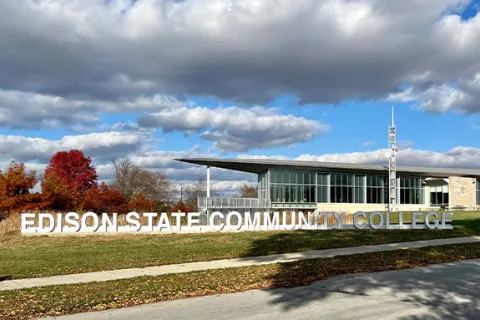
Edison State Community College in Piqua helps students stay on track with flexible programs designed for transfer or career readiness. We offer educational programs like an associate of science, an associate of arts, and a medical assistant certificate. Contact us today to request information and take the first step toward your future goals.
Frequently Asked Questions
Can I finish a community college program in one year?
Associate degree programs typically require at least two years to complete. However, having AP, dual enrollment, or transfer credits may help you finish sooner.
How long does it take if I go part-time?
Part-time students usually take three to five years to finish an associate degree. Taking six to nine credits per semester stretches the usual 60-credit program over more terms. This pace is often more manageable for students balancing work, family responsibilities, or other commitments.
Do summer classes shorten my time at a community college?
Yes. Summer classes can speed up graduation by helping you earn extra credits between fall and spring semesters. Because summer terms are shorter and faster-paced, they require more weekly effort. Even one or two summer classes each year can reduce your overall timeline.
How long does it take to transfer from a community college to a university?
Most students transfer after two or three years at a community college. Timing depends on completing required credits, finishing prerequisites, and meeting GPA standards. Some colleges offer transfer agreements that make the process faster and smoother, especially if you follow a structured degree pathway.
Is there a time limit to finish my associate's degree?
Usually, no strict time limit exists, and you can take longer if needed. However, older credits may expire after seven to ten years, and program requirements can change. Financial aid may also have limits, so it’s smart to check your school’s policies early.