
How Marketing Skills Open Doors to Multiple Career Paths
Building marketing skills opens doors across industries, from business and health care to nonprofits and entrepreneurship. Students gain communication, analytics, and digital expertise that support flexible, long-term career growth opportunities.
February 27, 2026
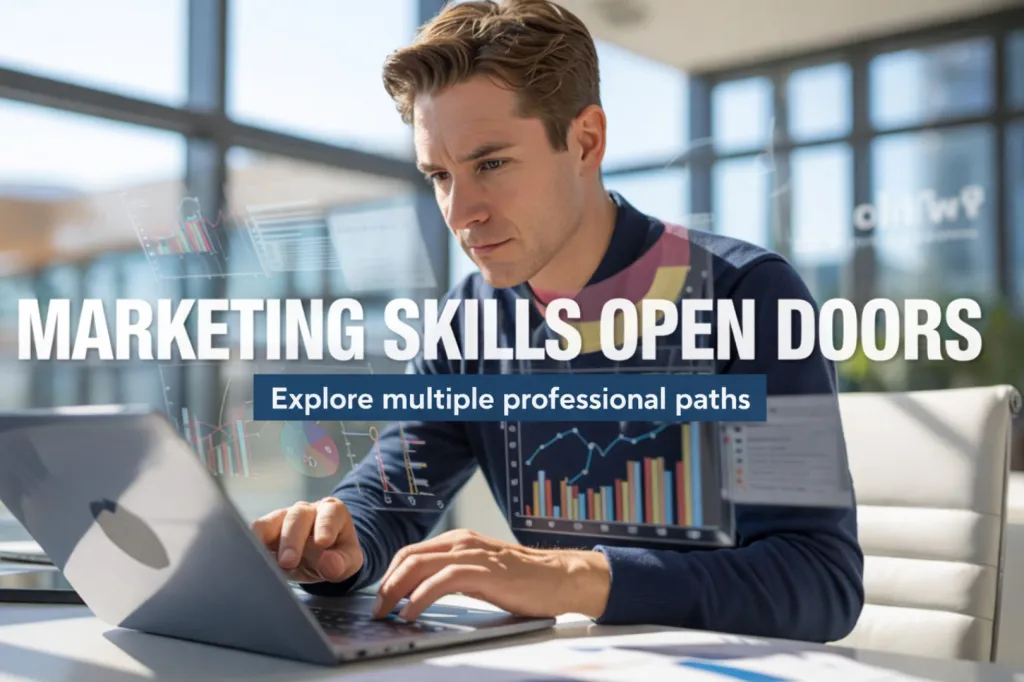
Marketing is more than a single job title; it is a versatile skill set that can shape countless career paths. From business and health care to nonprofits and entrepreneurship, organizations everywhere need professionals who understand audiences, communicate value, and use data effectively. Whether you are just starting college or considering a career shift, building marketing skills can expand your opportunities. In this blog, we will explore how marketing competencies translate into diverse roles and how students can begin developing them early.
Key Takeaways
- Core marketing skills, research, storytelling, data analysis, and digital tools are highly transferable across industries and roles, making them valuable assets no matter where your career takes you.
- In Ohio and across the U.S., marketing strengths can lead to careers in business, health care, nonprofits, entrepreneurship, and beyond, not just traditional marketing departments.
- Students at community colleges, like Edison State Community College in Ohio, can start building these skills early through associate degrees, certificates, and internships.
- Marketing competencies serve graduates well whether they choose corporate marketing roles, small local businesses, startups, or public service careers.
Why Marketing Skills Matter in Today’s Job Market
What Are Marketing Skills?
Marketing skills are the abilities professionals use to identify customer needs, communicate value, and promote products or services effectively. These skills combine creativity, strategy, analysis, and communication. They include understanding consumer behavior, crafting persuasive messaging, analyzing data trends, building brand identity, managing digital platforms, and developing campaigns that reach targeted audiences.
Modern marketing also integrates technology. Professionals must understand digital tools, analytics platforms, social media channels, search engine optimization, and content management systems. As a result, marketing skills are both creative and technical, making them highly versatile in today’s workplace.
Why Marketing Skills Are Valuable Across Industries
Every organization relies on marketing to survive and grow. Hospitals need to communicate services to patients. Retail businesses must attract shoppers online and in-store. Colleges and universities promote programs to prospective students. Nonprofits raise awareness and funding through outreach campaigns.
Because marketing drives visibility, reputation, and revenue, professionals with strong marketing skills are valuable in every industry. Employers look for individuals who can help them stand out in competitive markets, build customer relationships, and adapt to changing consumer behavior.
In a world where businesses compete for attention both online and offline, marketing professionals play a critical role in shaping how organizations are viewed and how effectively they connect with their communities.
How Marketing Skills Support Multiple Career Choices
One of the most significant advantages of marketing skills is flexibility. Unlike highly specialized career paths that limit you to one field, marketing competencies apply broadly. A graduate with marketing expertise can pursue roles in advertising, sales, communications, digital media, business development, or even entrepreneurship.
These skills also allow professionals to shift industries without starting over. For example, someone working in retail marketing can transition into health care marketing or education marketing because the foundational principles, audience analysis, messaging, branding, and strategy remain consistent.
How Marketing Skills Open Doors to Multiple Career Paths
Transferable Skills That Apply to Many Careers

Marketing education builds transferable skills that employers consistently seek. Communication is at the heart of marketing, teaching students how to present ideas clearly and persuasively. Analytical thinking develops through studying consumer data and market trends, while problem-solving skills grow as students design campaigns and evaluate performance metrics.
These abilities extend beyond traditional marketing roles. While strong communicators thrive in leadership positions. Analytical thinkers contribute to operations and strategic planning, and creative problem solvers bring innovation to product development and customer service initiatives. Because these skills are adaptable, marketing graduates often find themselves qualified for a wide range of career paths.
How Marketing Skills Create Diverse Career Opportunities
Marketing professionals work in a variety of environments. They may focus on digital advertising and search engine optimization, manage brand development or public relations, specialize in market research, or build social media communities and manage email campaigns. This variety reflects the dynamic and ever-changing nature of the field.
The diversity of marketing functions means students can explore different areas before choosing a specialization. This flexibility makes marketing an attractive field for individuals who enjoy variety and continuous learning.
How Marketing Skills Open Various Career Opportunities
As businesses continue investing in digital transformation, marketing professionals are increasingly involved in shaping online presence, customer experience, and brand storytelling. This creates opportunities in emerging fields such as content strategy, influencer marketing, data-driven advertising, and user experience research.
Marketing skills enable professionals to pivot as industries evolve. Whether launching a startup, supporting a nonprofit mission, or contributing to a global corporation, marketing expertise opens doors to varied and rewarding career paths.
Key Marketing Skills That Employers Look For
Communication and Persuasion Skills
Effective communication is the foundation of marketing success. Professionals must craft compelling messages, present ideas confidently, and adapt tone based on audience needs. Persuasion skills allow marketers to influence purchasing decisions, build brand loyalty, and foster trust.
Employers value individuals who can write clearly, speak confidently, and collaborate across departments. Whether developing a campaign proposal or managing client relationships, communication skills are essential.
Digital Marketing and Social Media Skills
Digital platforms dominate today’s marketing landscape. Employers seek candidates who understand social media management, content creation, search engine optimization (SEO), pay-per-click advertising, and analytics tools.
Knowledge of digital marketing strategies allows professionals to measure campaign performance, adjust messaging in real time, and engage audiences effectively. These technical skills significantly enhance employability in modern business environments.
Branding and Creative Strategy Skills
Branding goes beyond logos and color schemes. It encompasses storytelling, reputation management, and long-term strategic positioning. Creative strategy involves aligning messaging with organizational goals and audience expectations.
Employers appreciate professionals who can balance creativity with data-driven insights. The ability to think strategically while maintaining brand consistency is a powerful asset in any organization.
How Marketing Skills Lead to Multiple Career Paths
Marketing and Advertising Careers
Graduates with marketing expertise often pursue careers in advertising agencies, corporate marketing departments, or consulting firms. These roles may involve campaign development, media planning, brand management, or customer engagement strategies. Advertising professionals combine research, creativity, and analytics to design campaigns that capture attention and drive results.
Sales and Business Development Opportunities
Marketing and sales are connected. Professionals with marketing backgrounds understand customer behavior and value propositions, making them effective in business development roles. They can identify market opportunities, build client relationships, and contribute to revenue growth. These positions often provide performance-based incentives and opportunities for advancement.
Public Relations and Communications Roles
Public relations professionals manage an organization’s image and reputation. Marketing skills support media outreach, press releases, crisis communication, and community engagement initiatives.
Strong communication skills and branding abilities are especially valuable in these roles, as professionals must shape public perception and maintain positive relationships with stakeholders.
Digital Content and Social Media Careers
Content marketing and social media management continue to expand rapidly. Organizations rely on digital platforms to engage audiences, share information, and build brand communities.
Professionals in this field create blog posts, videos, graphics, and campaigns that drive online interaction and customer loyalty. Analytical skills help measure engagement and refine strategies over time.
Other Roles
Additional options include manufacturer’s representative, product manager, promotion manager, retail manager, and sales representative. These positions allow individuals to apply skills in communication, market analysis, customer relations, and strategic planning while supporting business growth and brand development.
How Edison State Prepare Students for Careers
Job-Ready Skills and Professional Development
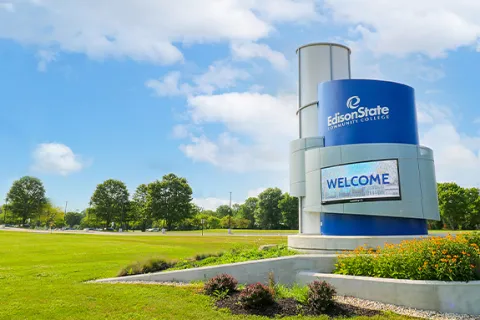
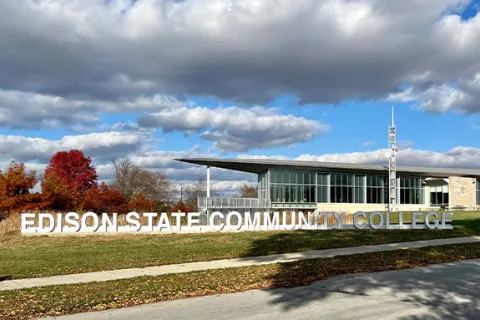
Preparing students for careers goes beyond teaching technical knowledge. At Edison State Community College in Piqua, career preparation includes building the professional competencies employers expect in today’s workforce. Students develop communication skills, critical-thinking abilities, teamwork habits, and problem-solving strategies that translate directly into workplace success.
Classroom projects often simulate actual real business or health care scenarios, requiring students to collaborate, meet deadlines, and present solutions clearly. In technical programs, students learn how to follow industry protocols, document procedures accurately, and operate within safety and compliance standards. These expectations mirror the professional environment students will enter after graduation.
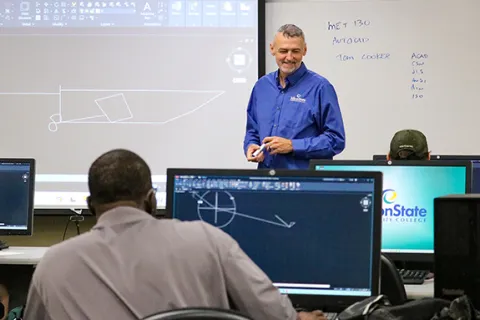
Additionally, faculty members bring industry experience into the classroom. Many instructors have worked in health care systems, manufacturing plants, corporate offices, or public safety agencies. Their insight ensures students understand both theory and real-world application. As a result, graduates leave not only with credentials but with workplace-ready confidence.
Training for Entry-Level and Advanced Career Opportunities
One strength Edison State in Piqua, is its ability to serve students at different stages of their careers, while some learners enroll to gain entry-level employment quickly. Others are already employed and seeking advancement or specialization.
For entry-level students, associate degrees and certificates provide direct pathways into roles such as registered nurse, medical assistant, maintenance technician, IT support specialist, accounting clerk, or law enforcement officer. The College structures programs to emphasize practical application, ensuring graduates can transition smoothly into these positions.
For working professionals, Edison State offers opportunities to build on existing credentials. Stackable certificates allow students to add specialized skills without starting over. The RN to BSN Completion program, introduced in the fall of 2024, is an example of how the College supports upward mobility within high-demand professions. By offering advancement opportunities locally, Edison State enables students to remain in the workforce while pursuing higher qualifications.
Career Exploration and Program Advising Support
Choosing the right career path can be overwhelming, particularly for first-generation college students or adults returning to school after a long hiatus. Edison State addresses this challenge through comprehensive advising services that begin at enrollment and continue through graduation. Academic advisors work closely with students to identify interests, assess strengths, and map out semester-by-semester plans. Rather than selecting courses randomly, students follow structured pathways aligned with their career goals. Advisors also help students understand the difference between applied degrees designed for immediate employment and transfer-focused degrees intended for continuation at a four-year university.
This intentional planning reduces confusion, shortens time to completion, and increases student confidence. When students understand how each course fits into a larger career goal, motivation and retention improve significantly.
How Edison State Supports Workforce Education
Partnering with Local Employers and Workforce Organizations
Edison State plays an active role in west-central Ohio’s workforce ecosystem. The College collaborates with regional employers, economic development organizations, and workforce agencies to ensure programs reflect current and future labor market needs.
Advisory committees regularly review curriculum content and provide direct feedback about emerging technologies, certification requirements, and workforce skill gaps. Because of this continuous dialogue, programs remain current rather than outdated.
This partnership model benefits both students and employers. Students gain education aligned with hiring expectations, while employers receive graduates who require minimal additional training.
Internship, Apprenticeship, and Work-Based Learning Opportunities and Work-based learning is central to career-focused education. A variety of programs include clinical rotations, internships, co-op placements, or practicum experiences that immerse students in professional environments before graduation.
Healthcare students complete supervised clinical hours in hospitals, long-term care facilities, and outpatient clinics throughout the region. Manufacturing and engineering technology students often participate in co-op experiences at local plants, gaining exposure to automation systems and industrial operations. Criminal justice students may work alongside regional law enforcement agencies.
These structured experiences serve as extended interviews. Employers observe student performance firsthand, and many graduates secure job offers before completing their programs. This seamless transition into employment highlights the effectiveness of community college workforce preparation.
Customized Workforce Training and Continuing Education Programs
Beyond degree programs, Edison State provides customized workforce training through its Center for Workforce Development and Work-Based Learning. Local companies partner with the College to deliver specialized training for incumbent employees, ensuring businesses remain competitive in evolving industries.
These programs may include short-term technical workshops, safety certifications, leadership development courses, or technology training. Continuing education offerings also allow individuals to update skills without committing to a full degree program.
By supporting both new students and current professionals, Edison State strengthens the entire workforce pipeline in Piqua and the surrounding communities.
Benefits of Choosing Edison State Community College in Piqua
Affordable Tuition and Financial Aid Opportunities
Affordability remains one of the most compelling reasons students choose a community college. Tuition at Edison State is significantly lower than at most four-year institutions, allowing students to pursue degrees and certifications without excessive debt.
Financial aid advisors help students explore federal aid programs, state grants, scholarships, employer tuition assistance, and payment plans. By lowering financial barriers, Edison State opens doors for first-generation students, working adults, and career changers who might otherwise postpone higher education. Students who intend to transfer can complete their first two years locally at reduced cost before moving on to a university, saving thousands of dollars.
Flexible Scheduling for Working Students
Many Edison State students balance employment, family responsibilities, and education. To support this reality, the College offers day, evening, online, and hybrid course formats.
Online and hybrid options provide additional flexibility for students who need to manage unpredictable work schedules. Evening classes enable full-time workers to attend after business hours. This flexible structure allows individuals to pursue credentials at a manageable pace without stepping away from income or family obligations.
Smaller Class Sizes and Personalized Instruction
Unlike large universities, where introductory courses may include hundreds of students, Edison State maintains smaller class sizes. This creates a supportive learning environment where instructors know students by name and can provide individualized feedback.
Personalized instruction improves comprehension, encourages participation, and strengthens academic performance. For students who may feel uncertain about returning to school, this level of support can make a significant difference in persistence and success.
Programs That Support Career-Focused Learning at a Community College
Health Care and Medical Training Programs
Healthcare remains one of the most in-demand sectors in west-central Ohio. Edison State’s nursing, medical assistant, medical laboratory technician, and related programs prepare students for roles in hospitals, clinics, and long-term care facilities.
Students train in simulation labs that replicate real clinical settings before completing hands-on rotations at regional healthcare facilities. The addition of the RN to BSN Completion program expands opportunities for nurses seeking leadership roles and career advancement.
Business and Accounting Career Programs
Business and accounting programs at Edison State equip students with foundational knowledge in finance, management, marketing, and operations. Coursework integrates practical software applications and case-based learning, ensuring graduates understand actual business processes. These programs prepare students for positions in administrative management, accounting support, small business operations, and corporate environments throughout the region.
Skilled Trades and Technical Education
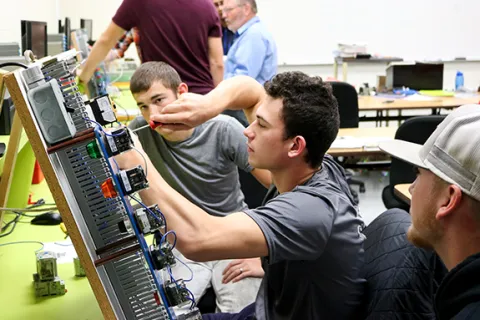
Advanced manufacturing and engineering technology programs reflect the industrial strength of Piqua and the surrounding communities. Students gain experience in robotics, automation systems, precision machining, and industrial maintenance.
Laboratory environments mirror actual production settings, ensuring students graduate ready to operate modern equipment. Employers value this hands-on preparation, particularly in manufacturing sectors that rely on technical precision.
Agriculture and Industrial Training Programs
Agriculture continues to play an important role in Ohio’s economy. Edison State’s agriculture and agribusiness programs prepare students for careers in farm management, agricultural operations, and related industries. Industrial training programs complement agricultural education by focusing on machinery, logistics, and operational efficiency, supporting both rural and industrial sectors of the regional economy.
Student Support Services That Help Career Growth
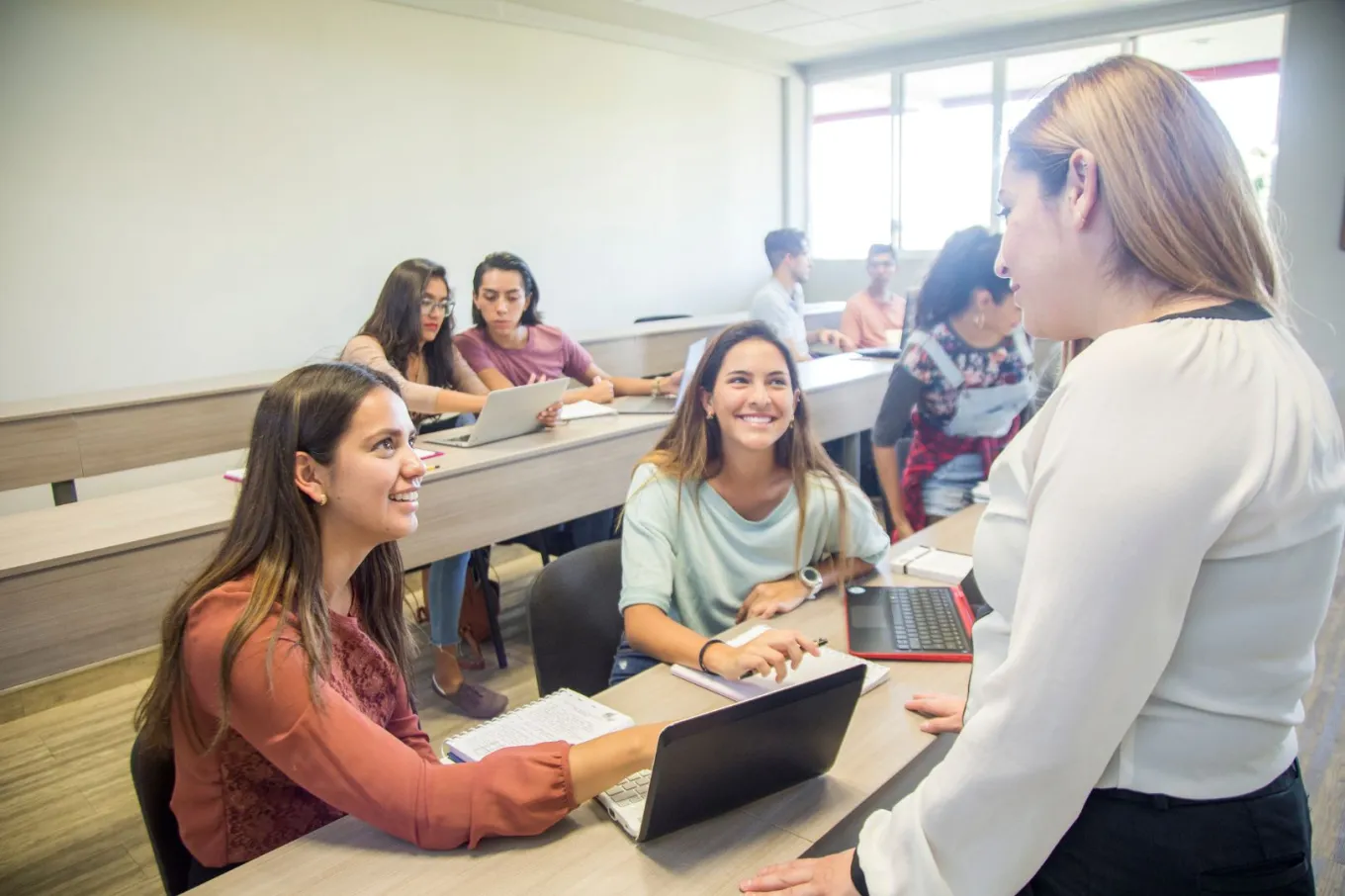
Career-focused education is most effective when students are supported both inside and outside the classroom. Edison State in Piqua doesn’t leave student success to chance. A network of academic, professional, and personal support services ensures learners can persist through challenges and transition confidently into the workforce.
Career Services and Resume Support
Edison State’s Career Services department plays a central role in helping students translate education into employment. Career readiness is woven into the college experience, not treated as an afterthought near graduation.
Students receive assistance with resume writing tailored to specific industries such as health care, manufacturing, business, and IT. Advisors help students highlight technical competencies, certifications, clinical hours, and work-based learning experiences in ways that resonate with employers. Mock interviews simulate real hiring situations, allowing students to practice answering behavioral and technical questions with confidence.
Career workshops address topics such as professional etiquette, networking strategies, LinkedIn profile development, and salary negotiation. These services are particularly valuable for first-generation college students and adult learners who may not have prior experience navigating professional hiring environments.
By preparing students early and consistently, Edison State ensures graduates are not only academically qualified but also professionally competitive.
Academic Advising and Tutoring
Academic support is a cornerstone of student retention and completion. Edison State provides structured advising services that guide students from their first semester through graduation. Advisors help students select courses aligned with their career pathways, understand degree requirements, and adjust schedules if personal or work obligations arise.
Free tutoring services offer additional reinforcement in subjects such as mathematics, writing, science, and technical coursework. Rather than struggling in isolation, students have access to one-on-one or small-group academic assistance designed to strengthen comprehension and improve performance.
For returning adults who may have been out of school for years, these resources provide reassurance and practical support. The College recognizes that many students are balancing employment, parenting, and other responsibilities. Academic coaching and tutoring help them maintain momentum toward their goals.
Job Placement and Employer Networking
Edison State’s strong employer relationships create direct connections between students and regional representatives. Career fairs, employer information sessions, and on-campus recruiting events bring companies directly to students.
Healthcare facilities, manufacturing firms, logistics providers, school districts, and public agencies regularly engage with the College to identify emerging talent. Because many programs include internships or clinical placements, students often build professional relationships before graduating.
The College also maintains job boards and employer referral systems to connect graduates with open positions in west-central Ohio. This localized focus strengthens the regional workforce by keeping skilled graduates within local communities.
Support for Adult Learners and Career Changers
Adult learners represent a significant portion of Edison State’s student population. Many are working full time, supporting families, or transitioning from one industry to another. Recognizing these realities, the College provides targeted services to make re-entry into education manageable.
Flexible scheduling options, online course availability, and part-time pathways allow adults to progress at a sustainable pace. Advisors help career changers identify transferable skills and select programs that align with both experience and long-term goals.
Technology assistance, orientation programs, and developmental coursework offer additional support for those who may feel uncertain about returning to college-level study. By fostering a welcoming and accessible environment, Edison State empowers adults to pursue meaningful career transformation without leaving Piqua or the surrounding communities.
Why Career-Focused Community College Education Matters for Piqua’s Future
The impact of career-focused education extends far beyond individual graduates. In Piqua and throughout west-central Ohio, the strength of the regional economy is closely tied to the availability of a skilled and adaptable workforce. Edison State serves as a foundational institution in building that workforce.
Strengthening the Local Workforce
Local employers depend on a steady pipeline of qualified professionals. Hospitals require trained nurses and medical technicians. Manufacturing facilities need automation specialists and maintenance technicians. Agricultural operations seek professionals knowledgeable in modern agribusiness practices. Schools, businesses, and public safety departments rely on educated and skilled staff.
By aligning programs with these needs, Edison State ensures graduates are prepared to step into high-demand roles. The College’s advisory committees and employer partnerships create a feedback loop that keeps training relevant and forward-looking. This alignment reduces workforce shortages and supports business continuity throughout the region.
Creating Opportunities for Long-Term Career Success
Career-focused community college education is not limited to immediate job placement. It also creates pathways for sustained professional growth. Stackable certificates, associate degrees, and bachelor’s completion options allow students to build credentials progressively over time.
For example, a student may begin with a technical certificate, secure employment, and later return to complete an associate degree. From there, transfer agreements with four-year institutions or programs like the RN to BSN Completion option provide continued advancement.
This layered approach to education makes long-term career development accessible and affordable. Students can grow professionally without relocating or taking on excessive debt. As industries evolve, graduates have the foundation needed to adapt and pursue new opportunities.
Supporting Economic Development in Piqua
A strong workforce fuels economic stability and growth. When residents gain access to quality employment, household incomes rise, local businesses thrive, and community investment increases. Education becomes a driver of prosperity.
Edison State contributes directly to regional economic development by supplying skilled professionals, partnering with employers for customized training, and supporting entrepreneurship and business growth. Workforce development initiatives ensure that companies considering expansion in west-central Ohio have confidence in the availability of qualified talent.
In this way, Edison State in Piqua is more than an educational institution; it is an economic anchor. By providing affordable, accessible, and career-focused education, the College strengthens not only individual futures but also the long-term vitality of Piqua and the surrounding communities.
Final Thoughts
Marketing skills do far more than prepare you for a single job title; they open doors across industries, roles, and career stages. From research and storytelling to analytics, digital tools, and relationship building, these competencies transfer into business, health care, education, nonprofits, entrepreneurship, and beyond. Whether you pursue traditional marketing positions, sales and customer success roles, or behind-the-scenes leadership opportunities, strong marketing foundations give you flexibility, adaptability, and long-term career growth in Ohio and across the country.
Edison State Community College, students interested in earning a marketing degree in Piqua can begin building these versatile skills through career-focused programs designed for today’s workforce. By combining hands-on learning, internships, and transfer pathways, students gain practical experience that supports multiple career directions. Your future path may be broader than you think, and the right foundation can help you shape it with confidence. Ready to start building skills that open doors? Contact us today to learn how we can help you take the next step toward your future.
Frequently Asked Questions
What jobs can I get with marketing skills besides working in a marketing department?
Marketing skills apply to roles in sales, customer success, project coordination, admissions, nonprofit outreach, and business development. Employers value communication, research, and data analysis abilities across industries, not just in traditional marketing positions.
Can I start a marketing career with an associate degree?
Yes, many students begin with an associate degree in marketing or business and qualify for entry-level roles like marketing coordinator, sales representative, or social media specialist. Additional certifications and experience can support long-term advancement opportunities.
Are marketing skills useful in health care or manufacturing fields?
Absolutely. Health care organizations use marketing for patient outreach and education, while manufacturers rely on marketing for client communication and trade promotion. Strong messaging, analytics, and relationship-building skills are valuable in both industries.
Do marketing careers require strong technical skills?
Marketing professionals benefit from understanding analytics tools, social media platforms, and digital advertising systems. While advanced coding is not always required, familiarity with data, software tools, and digital platforms is increasingly important.
How can students gain marketing experience while in college?
Students can build experience through internships, campus organizations, part-time marketing roles, and community projects. Working on real campaigns, managing social media accounts, or assisting local businesses helps develop practical, career-ready marketing skills.