






What Should I Know Before Studying Criminal Justice?
Students can explore criminal justice through community college programs that provide practical training, flexible learning options, and career-focused education, preparing them for opportunities in law enforcement, corrections, courts, and public service careers.
March 16, 2026

Criminal justice careers remain in steady demand, with approximately 62,200 job openings projected annually for police and sheriff patrol officers alone through 2034. If you’re asking what you should know before studying criminal justice, the answer begins with understanding that this field extends far beyond what television dramas portray. A criminal justice degree opens doors to diverse career paths spanning law enforcement, court administration, corrections, forensic science, and social services.
Before committing to a criminal justice program, prospective students need clear insight into daily work realities, educational requirements, essential skills, and job market conditions. This blog covers the critical considerations that will help you determine whether this career path aligns with your goals and prepare you for success in your criminal justice studies.
Key Takeaways
- Criminal justice covers far more than law enforcement, including corrections, court systems, crime analysis, victim advocacy, and forensic science roles.
- Most entry-level positions require at least an associate degree, while a bachelor’s degree significantly improves advancement opportunities and earning potential.
- Success in the criminal justice field demands strong written and verbal communication skills, critical thinking, ethical integrity, and emotional resilience.
- Job outlook varies by specialty; forensic science technicians see projected growth of 12 to13% in Ohio, while traditional law enforcement grows at about 3%.
- Hands-on experience through internships and scenario-based training provides crucial preparation that distinguishes successful candidates.
Understanding Criminal Justice Career Realities
The criminal justice system works through interconnected components, law enforcement agencies, criminal courts, corrections facilities, and rehabilitation services, all requiring trained criminal justice professionals. Unlike dramatic television portrayals, most criminal justice careers involve substantial documentation, methodical analysis, and routine procedures alongside occasional high-intensity situations.
Daily responsibilities vary significantly across roles. Police officers patrol designated areas, respond to calls, conduct traffic stops, write detailed police reports, and testify in court system proceedings. Detectives focus on criminal investigation, gathering evidence, and interviewing witnesses. Court administration roles involve record keeping, scheduling, and assisting attorneys with case preparation. Corrections officers supervise inmates, maintain facility safety, and coordinate rehabilitation programming.
Work environment challenges include shift work covering nights and weekends, potential exposure to violence and traumatic situations, extensive paperwork requirements, and bureaucratic procedures. Criminal justice workers frequently encounter crime victims and offenders in difficult circumstances, creating emotional demands that require genuine resilience.
The rewarding aspects prove substantial for those suited to this work. Criminal justice professionals directly impact community safety, help crime victims recover, and contribute to justice and crime prevention efforts. Government positions typically offer stable employment, comprehensive health insurance, pension benefits, and opportunities for continued education. Salary ranges reflect experience and specialization. National median pay for police officers reaches approximately $76,290 annually, correctional officers average $57,970, and crime analyst positions in Ohio start from $62,000 depending on experience.
Common Misconceptions About Criminal Justice Careers
Television creates unrealistic expectations about criminal justice careers that prospective students should recognize before beginning their degree program. The constant danger depicted in crime dramas doesn’t reflect reality; most sworn officers experience many routine shifts involving non-emergent calls, community relations, and administrative tasks rather than continuous action.
Many assume that criminal justice exclusively equals law enforcement career paths. In reality, the justice system encompasses probation and parole supervision, juvenile justice programs, victim advocate roles, forensic science laboratories, crime analysis units, emergency management, and policy development positions. Prevention and rehabilitation represent significant portions of criminal justice administration work.
The speed and simplicity of television courtroom scenes mislead viewers about actual legal processes. Real court system work involves discovery procedures, preliminary motions, scheduling delays, and appeals that extend cases far beyond single dramatic episodes.
Work-life balance concerns deserve a realistic assessment. While law enforcement and corrections often require shift work and overtime, forensic labs, courts, and analytical positions frequently offer more predictable schedules. Management and specialized roles typically provide greater stability than entry-level field positions.
Educational Pathways and Program Options

Understanding educational requirements helps you choose the right degree in criminal justice for your career goals. An associate degree provides access to many entry-level positions, including correctional officer, patrol officer at local agencies, and certain court or clerk roles. A bachelor’s degree opens supervisory opportunities, federal government positions, specialized investigative roles, and crime analyst careers requiring advanced analytical skills.
Certificate programs target specific skills without requiring full degree completion. These specialized courses, in areas like computer forensics, crime scene technology, or evidence processing, allow career changers or working professionals to gain certified competencies efficiently. The Peace Officer Academy short-term technical certificate prepares students specifically for law enforcement career certification requirements.
Online learning options provide flexibility for working adults pursuing a criminal justice degree online, though hands-on components like academy training, lab work, and scenario simulations typically require physical attendance. Effective criminal justice education balances theoretical knowledge with practical skill development.
Accreditation ensures your degree program meets professional standards and qualifies you for licensure requirements. Prospective criminal justice majors should verify both institutional accreditation and any professional certifications required for their target careers. State licensing boards, like Ohio’s OPOTA for peace officers, mandate specific coursework, background checks, and fitness standards.
Essential Skills and Personal Characteristics for Success
Success as a criminal justice student and professional requires developing specific competencies beyond academic knowledge. Strong writing ability proves essential for producing accurate police reports, evidence documentation, affidavits, and case summaries that may become critical in criminal court proceedings. Verbal communication skills support effective interactions with community members, crime victims, witnesses, and during courtroom testimony.
Critical thinking skills enable criminal justice professionals to analyze evidence, evaluate conflicting information, and make sound decisions under pressure. Understanding criminal law, constitutional rights, and procedural requirements demands analytical capability and attention to detail. Criminal investigation work particularly requires the ability to synthesize information from multiple sources into coherent conclusions.
Physical and mental demands vary across roles. Law enforcement career paths require passing fitness examinations, working in potentially dangerous settings, and maintaining situational awareness. Forensic science and analytical positions may be less physically demanding but require precision, extended concentration, and adherence to strict procedural protocols. All criminal justice careers involve exposure to disturbing content or traumatic situations that require emotional resilience and sound mental health management.
Technological skills have become increasingly important across the criminal justice field. Digital evidence analysis, cybercrime investigation, crime mapping using GIS systems, body camera footage management, and forensic software proficiency represent growing competency requirements. Criminal justice professionals need comfort with databases, analytical software, and evolving digital tools.
Ethical integrity stands as non-negotiable for criminal justice professionals who hold substantial power over others’ liberty and safety. Cultural competence, understanding diverse community members, recognizing implicit biases, and acknowledging historical injustices have become essential in contemporary criminal justice administration and recruitment.
Academic Preparation Before Starting Your Program
Prospective criminal justice majors can strengthen their readiness before beginning formal study. English composition courses develop the clear, logical writing skills essential for professional documentation. Practice constructing arguments and communicating complex information concisely.
Coursework in psychology and sociology provides a foundation for studying human behavior, understanding criminal behavior patterns, and recognizing social factors influencing why people commit crimes. These disciplines inform both enforcement approaches and rehabilitation strategies within the justice system.
Introduction to criminal law, constitutional law, or juvenile justice courses offer early exposure to legal frameworks governing criminal justice system operations. Political science coursework helps students understand governmental structures and public administration contexts.
Mathematics and statistics courses support data analysis skills, which are increasingly valuable for crime analyst positions and evidence-based policing approaches. Basic computer literacy and familiarity with common software applications prepare students for technology-integrated coursework and eventual workplace requirements.
Communications or public speaking courses build verbal presentation skills necessary for courtroom testimony, community engagement, and professional advancement in criminal justice careers.
Job Market and Career Advancement Opportunities
Projected employment growth for police and sheriff patrol officers is about 3% between 2024 and 2034, matching average growth across all occupations. Specialized areas demonstrate stronger growth, with forensic science technician positions in Ohio showing 12 to 13% projected increases and information security analysts seeing growth approaching 29%.
Approximately 34.5% of criminal justice workers hold a bachelor’s degree, while 61% have at least an associate degree, confirming that education significantly impacts career opportunities. Federal Bureau of Investigation agent positions, homeland security roles, and other federal government careers typically require advanced degrees or substantial experience beyond entry-level credentials.
Career paths typically progress from entry-level positions through specialization to supervisory and management roles. A patrol officer may advance to detective, then sergeant, lieutenant, and ultimately administrative leadership. Correctional officers can move into supervisory positions, specialized units, or transition to probation and parole work. Crime analyst positions may advance to unit leadership or broader policy development roles.
Geographic location significantly affects job availability and compensation. Urban areas generally offer more positions and higher salaries, but also higher living costs. Crime analysts in Ohio start earning from $62,000, depending on experience and regional factors.
Government positions provide substantial benefits beyond base salary. Health insurance, pension systems, union protections, overtime compensation, and tuition assistance programs represent significant total compensation value. Many agencies offer educational incentives supporting continued degree completion or the pursuit of a master’s degree.
Preparing for a Career in Criminal Justice

Pursuing a criminal justice degree requires understanding the demands, responsibilities, and opportunities within the field. From law enforcement to legal systems, this path offers meaningful work and career stability. With the right training and mindset, students can build a strong foundation for impactful and rewarding roles.
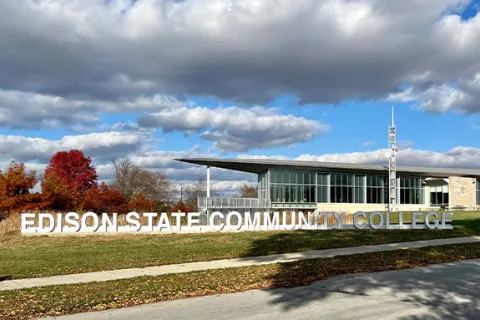
Edison State Community College offers a career-focused pathway through its criminal justice degree in Piqua, preparing students with practical knowledge and real-world skills. Take the next step with us and start building your future in criminal justice today.
Frequently Asked Questions
Do I need a four-year degree to work in criminal justice?
Many entry-level positions accept an associate degree or certificate completion. Correctional officers, local patrol officers, and certain court positions often hire candidates with two-year credentials. However, a criminal justice bachelor’s degree improves advancement opportunities, opens federal government positions, and qualifies graduates for specialized roles, including crime analyst and investigative positions requiring advanced degrees.
What’s the difference between criminal justice and criminology?
Criminal justice focuses on the practical operation of the justice system, law enforcement, courts, corrections, and administration. Criminology concentrates on the theoretical study of criminal behavior, crime causation, and patterns. Criminology graduates often pursue research, policy analysis, or academic careers, while criminal justice studies prepare students for applied professional roles. Both pathways can lead to similar career outcomes depending on specific positions.
Are criminal justice jobs only available in law enforcement?
Criminal justice careers extend well beyond police officers and detectives. The field encompasses corrections facilities, juvenile justice programs, court administration, victim advocate positions, forensic science laboratories, crime prevention specialists, probation and parole officers, private investigators, and policy development roles.
How important are internships for criminal justice students?
Internships provide crucial practical experience that significantly improves employment prospects. Real-world exposure to police reports, crime scene processing, evidence handling, and professional interactions builds competencies that classroom instruction alone cannot provide.
What salary can I expect starting out in criminal justice?
Entry-level police officer positions in the Troy, Ohio, area start around $44,500 to $57,057 annually. Crime analyst positions in Ohio begin at around $62,000. National entry-level salaries for correctional officers, forensic technicians, and similar positions typically range from mid-$40,000s to low-$60,000s, depending on education level, location, and specific role. Government positions often include substantial benefits packages, adding significant value beyond base salary.