





Physical Therapy Assistant Programs: Key Factors to Consider
Choosing the right PTA program involves evaluating accreditation, curriculum quality, clinical experience, faculty support, costs, and career outcomes to ensure strong licensure preparation, hands-on training, and long-term success in physical therapy.
November 10, 2025
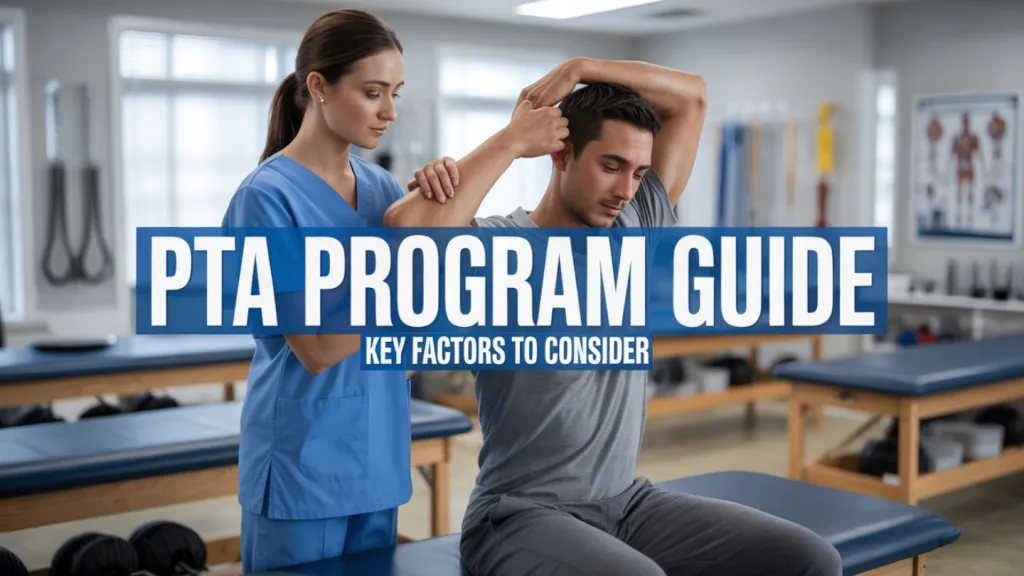
Choosing the right physical therapy assistant (PTA) program is a crucial step toward a fulfilling and successful career in health care. It’s essential to evaluate key factors such as accreditation, curriculum design, clinical experience, faculty expertise, and overall program costs. Each of these elements plays a vital role in shaping your educational journey and preparing you for national certification and real-world patient care.
This comprehensive blog explores what to look for in a high-quality PTA program, helping you make an informed decision that aligns with your personal goals and professional aspirations. Whether you’re just beginning to explore career options or ready to enroll in a program, understanding these factors will set the foundation for your future as a skilled and compassionate physical therapist assistant.
Key Takeaways
- Accreditation by the Commission on Accreditation in Physical Therapy Education (CAPTE) is essential for ensuring program quality and licensure eligibility.
- A robust curriculum that incorporates hands-on clinical experience is crucial for preparing students for the National Physical Therapy Exam and real-world patient care.
- Financial aid options, including scholarships and grants, are important for managing the costs of PTA programs and facilitating students’ educational journeys.
Accreditation and Licensing Preparation
Accreditation by CAPTE is crucial when choosing a physical therapist assistant program. Accreditation is not just a badge of honor; it’s a guarantee that the program meets national standards, ensuring the quality and credibility of the education you receive. Graduating from a CAPTE-accredited program is a prerequisite for taking the National Physical Therapy Exam to obtain licensure.
CAPTE accreditation also means the program undergoes continuous evaluations and improvements, aligning with contemporary industry practices. This ongoing assessment ensures that the curriculum, faculty, and facilities remain up to date, providing you with the best possible education.
Furthermore, graduating from a CAPTE-accredited program is a necessary step for licensure eligibility in all states. Graduating from an accredited PTA program allows students to take the National Physical Therapy Exam for PTA. Upon passing the licensure exam, each state has individual laws for licensure that are required to practice as a PTA in that state.
Preparing for the licensure exam involves more than just academic excellence. It requires a thorough understanding of clinical competencies and hands-on training in real-world settings. Choosing an accredited program is required to meet higher education standards and positions graduates to excel in the national exam.
From treatment plans to patient care, an accredited program equips students with the skills needed to become a licensed physical therapist assistant ready to make a difference in rehabilitation centers and beyond.
Curriculum Structure and Content
The PTA curriculum is designed to ensure students learn essential skills and knowledge reflective of current physical therapy practices. Courses combine theoretical instruction with practical lab experiences to help students develop confidence in clinical procedures and patient management. This includes comprehensive coursework in anatomy, therapeutic techniques, and patient care. Practical skills such as patient transfers, body mechanics, and the application of therapeutic modalities are critical components of the curriculum to prepare graduates to meet the demands of their profession.
Colleges structure program curriculum prepares students for the NPTE, which tests knowledge and abilities deemed essential for entry-level physical therapist assistants. The content for the exam is periodically updated to align with evolving practices in physical therapy, ensuring students’ education remains relevant and comprehensive.
Clinical Experience Opportunities

Clinical experience is the cornerstone of a rewarding career as a physical therapist assistant. These hands-on experiences allow PTA students to apply their classroom knowledge in real-world settings, bridging the gap between theory and practice. Clinical rotations are essential for developing clinical competencies and gaining practical experience in various health care settings.
Students typically engage in clinical education in diverse environments such as outpatient clinics, acute care facilities, and rehabilitation centers. Exposure to different patient demographics and conditions expands knowledge to build essential communication and treatment planning skills. Clinical experiences in manual therapy skills, skilled nursing facilities, and acute care settings provide invaluable insights and hands-on training that are crucial for professional development.
The State 65 mandate has reduced the percentage of credit hours assigned to clinical training in PTA programs. Now, clinicals make up less than 10% of total credit hours, even though students spend a lot of time—about 40 hours per week—in clinical settings. At Edison State, students do more clinical hours than most, with 19 weeks of clinical experience compared to the usual 15–16 weeks in other programs.
Most schools require students to complete 16 weeks of clinical rotations, usually split into two parts. At Edison State, clinical education is a top priority and is seen as the best way to develop hands-on skills. Edison State offers students more clinical experience through three full-time clinical rotations totaling 20 weeks.
Faculty Expertise and Support
The expertise and support of faculty members play a pivotal role in the success of PTA students. Experienced faculty provide not only technical knowledge but also mentorship, guiding students through their educational journey and professional development. Faculty mentorship is equally essential in helping students transition from academic learning to clinical excellence.
In addition to expert faculty, robust student support services are essential for fostering a conducive learning environment. These services ensure students have the resources needed to succeed and can include:
- Academic advising
- Tutoring
- Career counseling
- Financial aid assistance
Program Costs and Financial Aid Options
Understanding the costs associated with a PTA program and exploring financial aid options is crucial for prospective students. Expenses can vary based on factors such as tuition rates, additional fees, and the cost of textbooks and supplies.
Tuition and Fees
When budgeting for your education, it’s essential to factor in additional costs to get a comprehensive understanding of the financial requirements.
You should consider additional fees, such as lab fees, when planning your budget. While all programs have associated fees, financial aid, scholarships, grants, and loans can help cover these costs along with tuition. At Edison State, the average PTA graduate debt is only $1,640, making the overall investment manageable.
Understanding the full scope of tuition and fees allows better preparation and utilization of available financial aid options to support your education.
Textbooks and Supplies
The cost of textbooks and supplies is another significant factor to consider when enrolling in a PTA program. Required materials often include:
- Textbooks
- Lab manuals
- Educational materials
- Specialized equipment
- Uniforms
These costs can reach approximately $1,000, making it important to plan accordingly.
Managing these expenses can be easier by looking for used or digital versions of textbooks. Additionally, some programs may provide digital resources or online classes that reduce the need for physical textbooks, further aiding in cost management.
Scholarships and Grants
Exploring financial aid options, such as scholarships and grants, is crucial for managing the costs of a PTA program. Donors typically award scholarships based on academic performance, financial need, or community service, and they do not require repayment. Grants are usually based on the student’s financial circumstances and also do not require repayment.
Applying for financial aid involves submitting the Free Application for Federal Student Aid (FAFSA) to determine eligibility for federal grants and student loans. Utilizing these resources can significantly reduce financial burdens, allowing students to focus on their education and career advancement.
Program Reputation and Graduate Outcomes

The reputation of a PTA program plays a crucial role in your education. It can also have a significant effect on your job prospects. High pass rates on the National Physical Therapy Exam and successful graduate outcomes are strong indicators of a program’s quality and demonstrate its effectiveness in preparing students for successful careers. The PTA program at Edison State has a 100% job placement rate for graduates. One hundred percent of program graduates from 2018 to 2020 and 2022 to 2023 passed the National Physical Therapy Examination, an important step in receiving their PTA licenses. The overall pass rate over the past seven years is 97%.
PTAs can pursue career specialization in areas such as:
- Vestibular
- Pelvic Floor Health
- Prosthetics
- Aquatics
- Certified Manual Therapy
- Acute Intensive Care
- Burns
- And more
Edison State is highly respected in the region's physical therapy community (Auglaize, Clark, Champaign, Clermont, Darke, Logan, Mercer, Miami, Montgomery, and Shelby counties).
The College maintains strong partnerships with local clinics and health care providers, which can lead to valuable networking opportunities and potential job placements after graduation. Many alumni continue to support the program and often return as guest speakers or mentors. By engaging with the Edison State community, students can benefit from shared experiences and build a strong foundation for their future careers.
Visiting and Comparing PTA Programs
Visiting and comparing PTA programs is crucial for identifying the best fit for your educational and career aspirations. In-person visits help assess the learning environments, facilities, and overall atmosphere of the programs. Engaging with current students and faculty offers valuable insights into the program’s quality and community.
Meeting faculty during campus visits helps you understand their teaching styles and expectations. Observing classes can help you evaluate the effectiveness of instructional methods and the program’s alignment with your learning style. These interactions and observations are crucial for making an informed decision about the best PTA program for you.
Comparing various programs based on their unique strengths allows you to make the educational choice that’s right for you. Consider factors such as:
- Program reputation
- Clinical experience opportunities
- Faculty expertise
- Financial aid options
Career Prospects and Professional Development
The career prospects for physical therapist assistants are promising, with employment expected to grow by 25% from 2023 to 2033. Approximately 72% of PTAs are employed in hospitals or outpatient physical therapy settings. This strong job market ensures graduates can find employment in various health care environments.
Advanced certifications and dual certifications provide PTAs with a competitive edge in the job market.
The earning potential for PTAs is also noteworthy, with the highest 10 percent earning more than $85,230 annually. This financial incentive, coupled with the diverse career advancement opportunities, makes becoming a PTA a rewarding and successful career choice.
To learn more about career prospects, job shadowing is a key requirement for most schools. It helps students confirm if this is the right field for them. While shadowing, students are encouraged to speak directly with the PTAs on staff. Ask where they went to school and what they thought about their program, curriculum, faculty, and overall experience.
Final Thoughts
Choosing the right physical therapist assistant program requires balancing multiple factors, from accreditation and curriculum quality to clinical experience and faculty expertise. The best programs prepare students not only for the National Physical Therapy Exam but also for success in diverse health care environments. Considering costs, financial aid options, and flexible scheduling can help you find the perfect fit for your career goals.
Edison State Community College offers an exceptional physical therapist assistant program in Troy, combining a strong academic foundation with real-world clinical experience and dedicated faculty support. With comprehensive training and student-centered resources, we empower future physical therapist assistants to build rewarding, impactful careers in patient care and rehabilitation.
Frequently Asked Questions
What are three influences that may determine how PTAs practice?
Educational training, clinical experience, and mentorship shape how a PTA practices. Consider these factors when choosing a PTA program.
Rules for the profession, state laws, and what each PTA is allowed to do all affect how PTAs work. Knowing these things helps PTAs do their jobs correctly and safely.
Why is accreditation important for a PTA program?
Graduating from an accredited PTA program is a requirement for students to be eligible to take the National Physical Therapy Exam (NPTE). Graduates cannot become licensed in the state they choose to practice without first passing the NPTE.
What should I look for in a PTA curriculum?
When choosing a PTA program, one should consider the faculty's expertise, the structure of the curriculum and classroom content, the learning methods, the program's teaching philosophies, and clinical education opportunities. Some programs offer more hands-on learning opportunities, while others are more lecture-based.
How important is clinical experience in a PTA program?
Clinical experience is essential to provide students with the opportunity to practice the skills learned in the classroom and apply those skills to real cases. Clinical education is the most effective way to sharpen those skills and give students the opportunity to learn beyond what can be covered in the classroom.
What financial aid options are available for PTA students?
PTA students can access federal student aid, scholarships, and grants, all of which can help alleviate educational costs without repayment. Exploring these options will make a substantial difference in managing your financial responsibilities.